
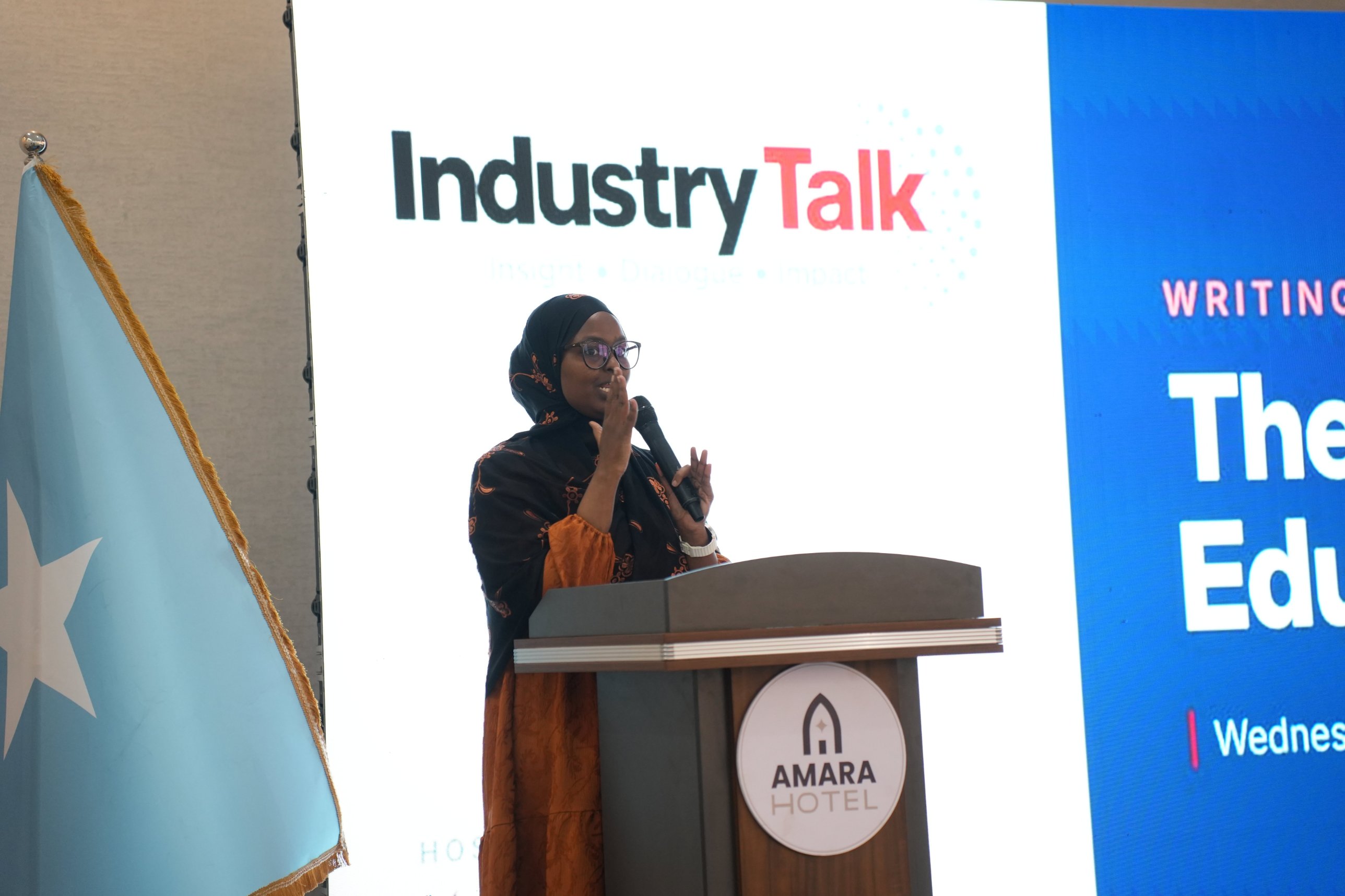
So when Veynuus decided to start a series of industry conversations, it was natural that the first one would be about higher education. On 25 November 2026, we hosted our first Industry Talk: The Future of Higher Education in Somalia.
Why now
People have asked me why we chose this moment. The honest answer is that the sector cannot wait.
This year, several universities closed their doors, and others are struggling to stay open. Almost all of them depend on student fees, at a time when many families can barely pay. Meanwhile, the job market is small, and young graduates are competing for very few openings. Many of them have ideas for businesses, but nowhere to turn for the money to start.
When we asked students directly, more than 2,000 of them answered us in just a few weeks. That alone tells you something: young people want to be heard, and they have a lot to say.
These are not problems one university, one ministry or one donor can fix alone. But the people who can fix them together rarely sit at the same table. That is the gap we want to close, and we want to close it now, while there is still time to shape what comes next.
What the Industry Talk is
The Industry Talk is simple. One sector at a time, we bring industry experts and leaders into one room to look at the facts, discuss openly and plan for what lies ahead.
We do three things differently. First, every talk starts with evidence: before the talk, our team surveyed students and universities across all the federal member states, so the conversation begins with what people actually told us. Second, it is a dialogue, not a conference. There were very few speeches; most of the morning was open discussion. Third, it does not end when the room empties. We will share what we learn and follow up on the ideas that come out of it.
What happened in the room
Leaders from more than 30 universities in every region sat at one table with the National Commission for Higher Education, the Puntland Higher Education Commission, international partners including UNESCO, UNICEF, FAO and HESS II, and banks and investors. Some travelled from Kismayo, Baidoa, Galkayo, Dhusamareb, Beledweyne, Garowe and Bosaso to be there. That meant a great deal to us.
We opened with what the evidence showed. More than 2,000 students and 26 universities answered our surveys, and a few numbers set the tone for the morning:
- 59% of students find fees hard to pay, and 23 of 26 universities only just covered their costs or ran a shortfall last year.
- 52% of students have never done an internship, and only 30% are very sure of finding a job within a year.
- 81% of students have a business idea, but 87% say money is what stops them.
Three questions guided the discussion: where Somali universities stand today, how graduates can be better connected to work and to major projects, and how universities and students' ideas can be financed. The conversation was honest, practical and, at times, uncomfortable. That is exactly what we hoped for.
What comes next
Higher education is only the beginning. In 2027, we plan to make the Industry Talk a quarterly series. The sectors we are looking at include energy; the productive sectors (agriculture, livestock and fisheries); finance and the digital economy; and cities, housing and infrastructure. We will confirm the topics and dates in the coming months. Each one will follow the same path: evidence first, everyone at the table, and practical next steps.
For me, this is part of how Veynuus gives back. We are a Somali firm, and I believe the best answers to Somalia's challenges come when the people closest to them are heard and work together.
We will publish the full findings and recommendations in the coming weeks and share them with everyone who took part. To every university, student and partner who supported this first talk: thank you. Let's make it the start of something lasting.
If your organisation would like to partner with us on a future Industry Talk, write to us at partnerships@veynuus.com.
Naima Moalin, CEO, Veynuus